
Training and living together
Children and dogs: how to make living together safe at home
By Casa Trufa · · 8 min read
Yes, they can live together, but safety comes from the adults, not from the breed. The American Academy of Pediatrics, the CDC and the RSPCA agree on the essentials: never leave a young child alone with a dog, not even the family dog, teach children when not to approach, and give the dog a place to retreat to.
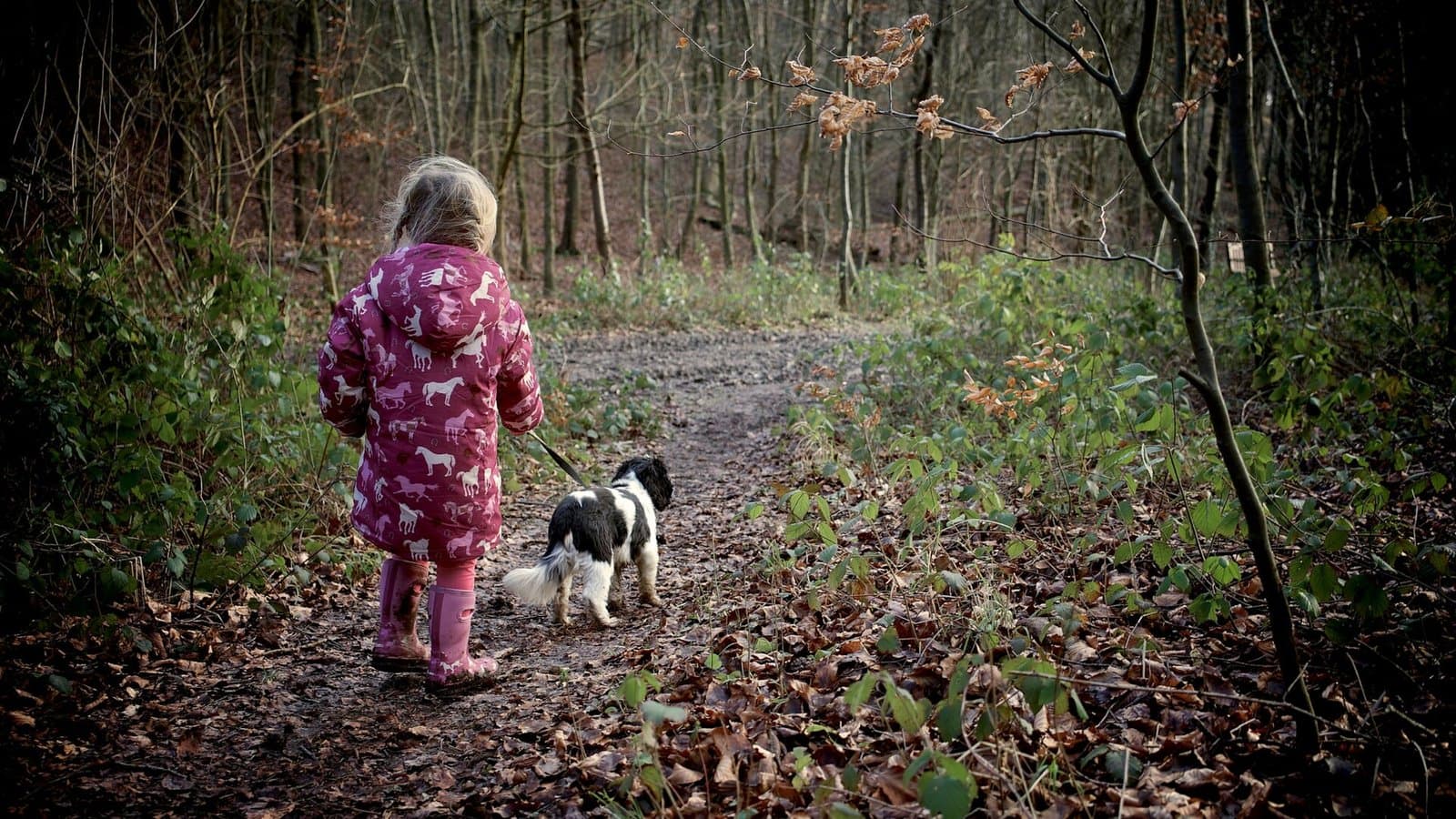
Can children and dogs live together safely?
Yes, when the adults set the conditions. Three are enough to prevent most problems: an adult present whenever a young child is with the dog, a dog that has a place of its own where nobody bothers it, and children who know when to approach and when not to.
It is worth taking seriously the part that does not show up in the photos. The U.S. Centers for Disease Control and Prevention (CDC) note that children are at greater risk of being bitten than adults and that their injuries tend to be more serious.
The RSPCA explains where the problem comes from: children and dogs communicate differently. Children treat the dog as an equal: they hug it, carry it, tell it off. And a dog can experience all of that as a threat.
Why should a young child never be left alone with a dog?
Because any dog can bite, and a young child cannot read its warnings. The American Academy of Pediatrics puts it like this: never leave a young child and a dog alone together, whether it is the family dog, a dog you know or one you are assured is well behaved.
The CDC and the RSPCA say the same in other words: not without supervision, even if the child already knows the dog and even if it is the family’s own.
The fact that most surprises families comes from the CDC: most bites to young children happen during everyday activities and with dogs the child knows. It is not the unfamiliar dog in the street; it is the dog at home, the grandparents’ dog, the neighbor’s dog.
Supervising does not mean being in the house. It means watching, close enough to step in. When that is not possible (the shower, the kitchen, a phone call), they are separated: a safety gate, the crate with a chew, or the child with you.
How does a dog show that it is uncomfortable?
With its body, long before it growls. According to the RSPCA’s guide to body language, a worried dog lowers its body and head, tucks its tail, puts its ears back, avoids eye contact or turns its face away, and licks its lips. If nobody heeds that warning, the dog raises the tone.
| How the dog is | What you see, according to the RSPCA |
|---|---|
| Relaxed | Mouth open and relaxed, ears in their natural position, wagging tail, weight evenly spread |
| Worried | Body and head low, tail tucked, ears back, avoids looking or turns its head, licks its lips, lifts a front paw |
| Very unhappy | Stiff body with the weight forward, hair raised, fixed stare, tail high and rigid; or tail between the legs, ears flat and teeth showing; growling |
The adult’s job is to act at the second row: move the child away calmly and let the dog withdraw. The RSPCA includes it among its rules: if the dog looks unhappy, let it go to its safe place.
A dog that growls is not punished. The growl is information: it says the dog cannot take any more. A dog punished for warning may learn not to warn.
Which rules should a child learn for being around a dog?
A few, clear and repeated many times: when the dog is not to be disturbed, how to touch it, what to play with it and what to do around an unfamiliar dog. Those suggested by the American Academy of Pediatrics, the CDC and the RSPCA fit in a list for the fridge door:
- The dog is not disturbed when it is eating, sleeping, ill or caring for its puppies. Nor when it has a toy or a bone.
- Its bed or crate belongs to the dog. If it is there, nobody touches it or takes it out.
- Stroke it gently, staying away from its face and tail. No pulling ears or tail, climbing on top of it or stepping on it.
- No hugging and no kissing. The RSPCA warns that most dogs do not like it.
- Near the dog, quiet voices and calm movements. No shouting or running.
- Play with toys, not with hands. The American Academy of Pediatrics asks families to avoid rough games such as wrestling or tug-of-war.
- You do not go up to a dog you do not know. Ask the owner for permission and let the dog come over and sniff first.
- If a dog scares you, stand still like a tree. No screaming or running, no looking it in the eye, and backing away slowly once it loses interest.
- After touching the dog, its food or its things, wash your hands. The CDC asks for an adult to supervise handwashing in children under five.
It helps to involve children in what they can do: filling the water bowl, hiding treats for the dog to find, teaching it a trick with an adult alongside. The RSPCA expressly recommends it. How to teach is covered in basic puppy training.
How do you prepare a dog for the arrival of a baby?
With time, introducing the changes one at a time before the birth. The RSPCA recommends bringing out the crib and the stroller in advance, playing recordings of baby sounds to the dog and teaching it to use a bed of its own for quiet times, so that it does not have to learn everything in the same week.
Once the baby is home, let its presence come with good things for the dog — a chew, some stroking, time with you — and let the rule in the previous section have no exceptions. The stage that calls for the most care usually comes later, when the baby starts crawling and is the one moving toward the dog.
Are there breeds that are “good with children”?
No breed guarantees it. The American Academy of Pediatrics says it in four words: any dog can bite. Breed gives you an idea of size, energy and needs, and that does matter when choosing, but it does not tell you how one particular dog will behave with one particular child.
What is worth thinking about before choosing:
- Size and fragility. A very small dog, such as a Maltese, can get hurt if a child drops it or squeezes it, and a dog in pain defends itself.
- Size and strength. A large-breed puppy, such as a Bernese Mountain Dog, can knock a small child over with no ill intent at all.
- Energy and instinct. A very active dog needs daily exercise and something to do; without them, life with young children gets complicated.
- The individual. What its parents are like, what it saw and heard in its first weeks and whether it met children during socialization.
If you are at that point, the breed pages describe the temperament and needs of each one without promises, and the quiz helps you match them against your children’s ages and your routine. It is worth asking a breeder whether the puppies have had contact with children.
What should you do if a dog bites a child?
Wash the wound immediately with plenty of soap and water and go to a health service. Colombia’s Ministry of Health calls for thorough washing of the wound for 10 to 15 minutes; medical staff then assess the risk of rabies and the need for antibiotics or a tetanus vaccine.
This also goes for a small bite and for the family dog: the doctor decides how to manage it. Take the dog’s vaccination record with you if you have it. The American Academy of Pediatrics recommends asking the owner for proof of rabies vaccination when the dog belongs to someone else.
Then comes the dog. A bite, or a growl that keeps happening, is a reason to consult the veterinarian, who rules out pain or illness and can refer you to a behavior specialist. AVSAB is clear that aggression is not treated with punishment, but with a plan drawn up by a professional. In the meantime, the dog and the children do not share a space without an adult between them.
Frequently asked questions
At what age can a child be left alone with the dog?
The sources do not set an age. The American Academy of Pediatrics speaks of never leaving a young child and a dog alone together, and the CDC of not letting young children play with dogs unsupervised. It depends on the maturity of the child and of the dog, and the adult decides.
What is the best dog breed for children?
No breed guarantees it. What matters more is that particular dog’s temperament, how it was socialized, its size and energy relative to the children’s ages, and supervision. Any dog can bite.
Why should you not hug a dog?
Because most dogs do not like it, according to the RSPCA: a hug holds the dog still and brings the child’s face close to the dog’s. It is better to stroke it on the side or chest when it comes over by itself.
What do I do if my dog growls at my child?
Separate them calmly and do not punish the growl: it is a warning, and a dog punished for warning may stop doing it. Look at what was happening and consult the veterinarian, who can refer you to a behavior specialist.
What should you do if a dog bites a child?
Wash the wound with plenty of soap and water for 10 to 15 minutes and go to a health service, where they assess the wound and what to do about rabies, tetanus and antibiotics.
Sources
- American Academy of Pediatrics (HealthyChildren.org): Dog Bite Prevention Tips. The figures it gives are for the United States
- CDC (U.S. Centers for Disease Control and Prevention): dogs, Healthy Pets. Supervision, bite prevention and handwashing
- RSPCA: children and dogs. Golden rules and preparing for a baby
- RSPCA: understanding dog body language. Signs of a relaxed, a worried and a very unhappy dog
- Ministerio de Salud y Protección Social (Colombia’s health ministry): escenarios y conductas posexposición ante el virus de la rabia (rabies post-exposure scenarios and management). In Spanish. Washing the wound for 10 to 15 minutes with soap and water, and medical assessment
- AVSAB: Position Statement on Humane Dog Training. 2021. Aggression problems are assessed by a veterinarian and are not treated with punishment
Topics children · family · dog bites · body language · babies
Keep reading