
Training and living together
Puppy socialization: when to start and how to do it safely
By Casa Trufa · · 8 min read
Socializing means getting a puppy used, through pleasant experiences, to the people, animals, sounds and places it will live with. The period when it benefits most runs roughly from three to twelve or fourteen weeks. The veterinary society AVSAB recommends starting before vaccinations are complete, choosing low-risk places.
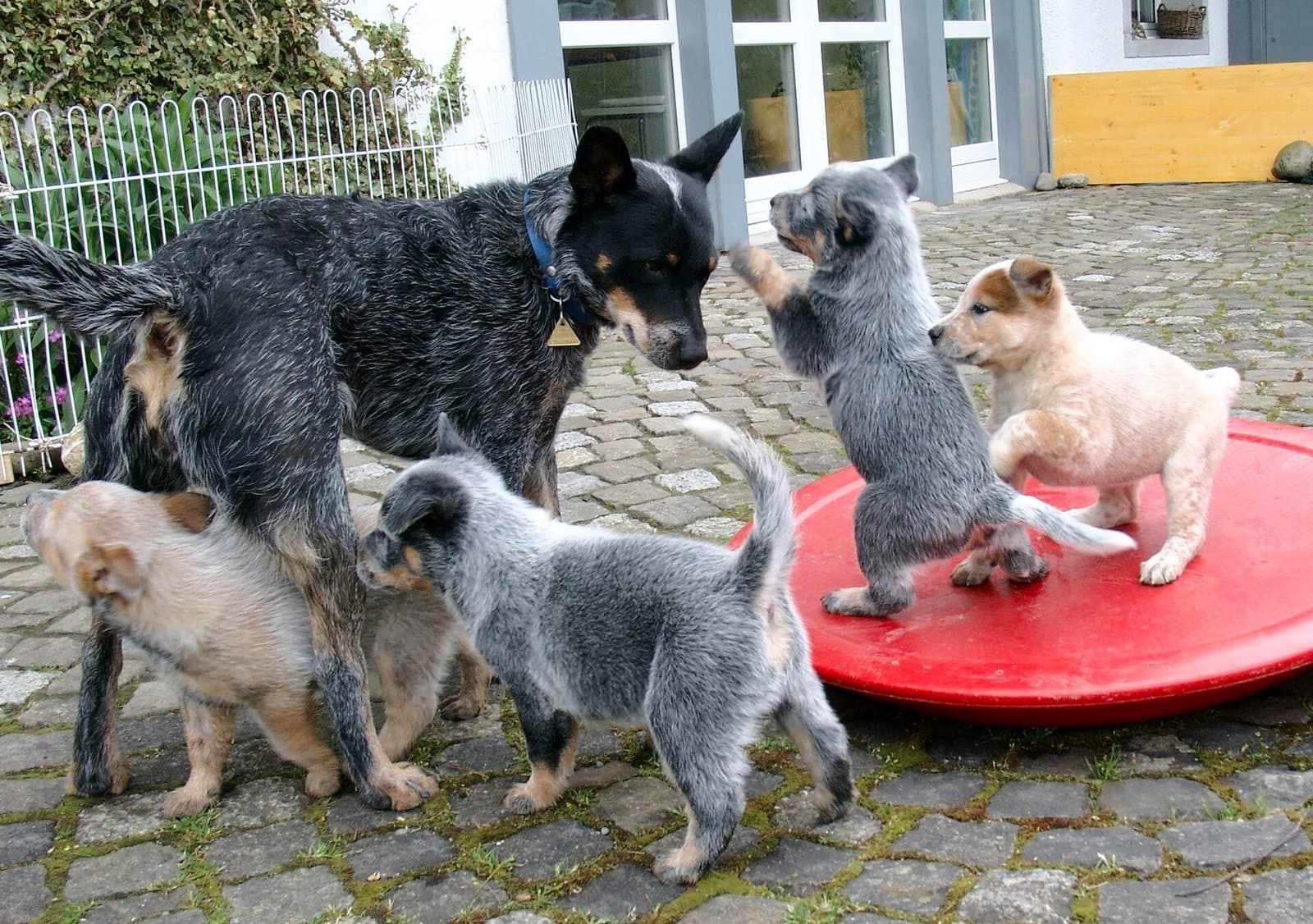
What is puppy socialization and when is it done?
It is the process by which a puppy learns, through pleasant experiences, that the people, other animals, sounds and places it will meet in its life are normal. It happens above all in the first three months, which the veterinary behavior society AVSAB calls the primary and most important time.
It is not the same as training. Sitting, or coming when called, can be taught at any age; the ease with which a dog accepts new things without fear cannot. That is why socialization comes first, and the rest is in basic puppy training.
AVSAB explains why it matters so much: incomplete or improper socialization during that stage increases the risk of later behavior problems, such as fear, avoidance or aggression, and those problems are the leading reason the bond between a dog and its family breaks down.
How long does the sensitive period last?
Roughly from three to twelve or fourteen weeks of age. AVSAB sums it up as the first three months, when sociability outweighs fear. The Merck Veterinary Manual divides it into stages and adds that a puppy remains very receptive until sixteen to twenty weeks.
| Age | What happens, according to the Merck Veterinary Manual |
|---|---|
| 3 to 8 weeks | It relates mainly to other dogs: its mother and littermates |
| 5 to 12 weeks | Its interest shifts toward people |
| Up to 14 weeks | Without contact with people up to this age, social skills can remain very limited |
| Up to 16 to 20 weeks | Still the stage when it learns most readily to handle new situations |
The sources do not give exactly the same weeks: the veterinary charity PDSA, for example, speaks of four to twelve. It is not a door that shuts on a particular day, but a window that gradually narrows.
The table has a practical consequence: more than half of that period is spent with the breeder. What the puppy has seen, heard and walked on before it reaches your home counts as much as what you do. It is one of the things worth asking a breeder, and it is also why the age at which a puppy goes home matters.
Can you socialize a puppy before its vaccinations are complete?
Yes, and that is what AVSAB recommends. Its position statement says that socialization before a puppy is fully vaccinated should be the standard of care, because the sensitive period and the vaccination schedule overlap and waiting until the end of the series means losing almost the whole window.
AVSAB’s argument is one of comparative risk: the immunity a puppy receives from its mother, the first vaccines and appropriate care make the risk of infection relatively small compared with the risk of a serious behavior problem. But “relatively small” is not zero, and the same statement sets conditions:
- for puppy classes, at least one dose of vaccine given seven days before the first class, and a first deworming;
- vaccines kept up to date for as long as the classes last;
- classes held on surfaces that can be cleaned and disinfected;
- avoiding dog parks and other areas heavily used by dogs whose vaccination or health status is unknown.
The reason for so much caution is mainly parvovirus, which according to the Merck Veterinary Manual spreads through feces and contaminated objects and can survive for months in the environment.
How do you socialize a puppy safely?
By taking it to meet the world without putting it down where unknown dogs pass. The PDSA suggests three routes before vaccinations are complete: yards or gardens not used by unvaccinated dogs, outings in your arms so it sees people and places, and meetings with vaccinated adult dogs.
- In your arms or in a carrier backpack: the front desk of your building, the corner grocery, a street with traffic. It looks, listens and smells without touching the ground.
- In the car: short trips that end in something pleasant. AVSAB recommends that puppies accompany their owners on as many car trips as possible.
- In trusted homes: relatives or friends with calm, vaccinated adult dogs.
- In your own home: visitors one at a time, of different ages and appearances; the vacuum cleaner, the blender, the doorbell, the rain.
- With daily handling: touching its paws, ears, mouth and tail gently and with a treat. AVSAB insists that puppies learn to accept being handled all over their bodies.
- In a puppy class that meets AVSAB’s conditions and works with rewards, if there is one near you.
The rule that orders everything: each experience must end well. A short while, at a distance at which the puppy is calm, with food or play, and then home. The point is not to tick off a list.
What should a puppy get used to?
Whatever is going to be part of its adult life: different people, other animals, sounds, surfaces, places, being handled and being alone for a while. AVSAB speaks of exposing a puppy to as many people, animals, stimuli and environments as can be done safely and without overstimulating it. A list for guidance:
- People: children, older adults, men with beards, people with a helmet, umbrella, uniform or cane.
- Animals: well-balanced, vaccinated adult dogs; cats; on a farm, chickens, cows and horses, at a distance.
- Sounds: traffic, motorcycles, horns, thunder and fireworks on recordings at low volume, household appliances.
- Surfaces: tile, grass, dirt, grates, stairs, the elevator.
- Places: the car, the veterinary clinic on a visit with no injection, the groomer.
- Handling: brush, collar or harness, having its teeth looked at and its paws touched.
- Being alone: short periods playing by itself or sleeping in its crate. AVSAB includes this explicitly to prevent over-attachment; we go into it in separation anxiety in dogs.
The order depends on your life. A Border Collie that will live in the city needs plenty of bicycles, skateboards and running children; a puppy headed for a farm, large animals and machinery.
How do I know if I am overwhelming my puppy?
Watch the puppy, not your list. AVSAB warns that exposure should not cause overstimulation, which shows as excessive fear, withdrawal or avoidance. If the puppy crouches, tucks its tail, flattens its ears, looks away, licks its lips or wants to leave, it is too much.
Those are the signs the RSPCA describes in a worried dog. When they appear, move away to where the puppy is calm again. The PDSA says the same: take it out of the situation and to a place where it is settled.
What you do not do is force it. Bringing a puppy up close to what it fears “so it gets used to it” is what trainers call flooding, and AVSAB includes it among the techniques to avoid. Nor is it wise to pile many new things into a single day.
What do I do if my dog is already past 14 weeks?
Keep socializing, more slowly. AVSAB encourages owners of puppies that are past three months to go on introducing them to as many people, animals and places as is practical, and recommends keeping those experiences up through the first year and into adulthood to maintain a sociable dog.
What changes is the method: more distance, shorter sessions, higher-value treats and no hurry. What took an afternoon at ten weeks can take weeks at five months.
If the puppy shows fear — it hides, trembles, growls or barks at people or dogs and does not improve — AVSAB is clear: seek veterinary guidance. The veterinarian rules out medical causes and, if needed, refers you to a behavior specialist.
Frequently asked questions
At what age do you socialize a puppy?
From the time it is with the breeder and, above all, up to twelve or fourteen weeks. AVSAB speaks of the first three months as the primary period; socialization continues afterward, but it takes more effort.
Can I take my puppy out before it has all its vaccines?
AVSAB recommends socializing a puppy before the series is complete, but in low-risk settings: in your arms, in trusted homes and with vaccinated dogs, avoiding parks and areas heavily used by dogs. Your veterinarian tells you when it can walk on the street.
What happens if I don’t socialize my puppy?
According to AVSAB, incomplete or improper socialization increases the risk of behavior problems later on, such as fear, avoidance or aggression.
Does socializing mean letting my puppy play with every dog?
No. It means meeting calm, vaccinated dogs, and the meeting going well. Play that is too rough, or a scare with another dog, teaches the opposite of what you are after.
Can you socialize a dog that is already four or five months old?
Yes, and AVSAB encourages owners to keep doing it, although progress is slower. You work at a greater distance, more slowly and with treats; if there is fear, with the veterinarian’s help.
Sources
- AVSAB (American Veterinary Society of Animal Behavior): position statement on puppy socialization. 2008. Primary period, socialization before vaccinations are complete and conditions for puppy classes
- Merck Veterinary Manual (dog owners’ version): normal social behavior in dogs. Stages by week and the effect of a lack of contact with people
- PDSA: puppy socialisation. How to socialize before vaccinations and what to get the puppy used to
- RSPCA: understanding dog body language. Signs of a worried dog
- Merck Veterinary Manual (dog owners’ version): disorders of the stomach and intestines in dogs. Parvovirus: transmission and persistence in the environment
- AVSAB: position statement on humane dog training. 2021. Why forced exposure is not used
Topics puppy · socialization · sensitive period · vaccines · fear
Keep reading