
Training and living together
Basic puppy training: where to start and which methods to use
By Casa Trufa · · 8 min read
Training starts the day your puppy comes home, and it is done with rewards: you show the puppy what to do and reward it when it does. The veterinary society AVSAB recommends reward-based methods only and advises against punishment. Start with house training, not biting hands, the puppy’s name, recall and the crate.
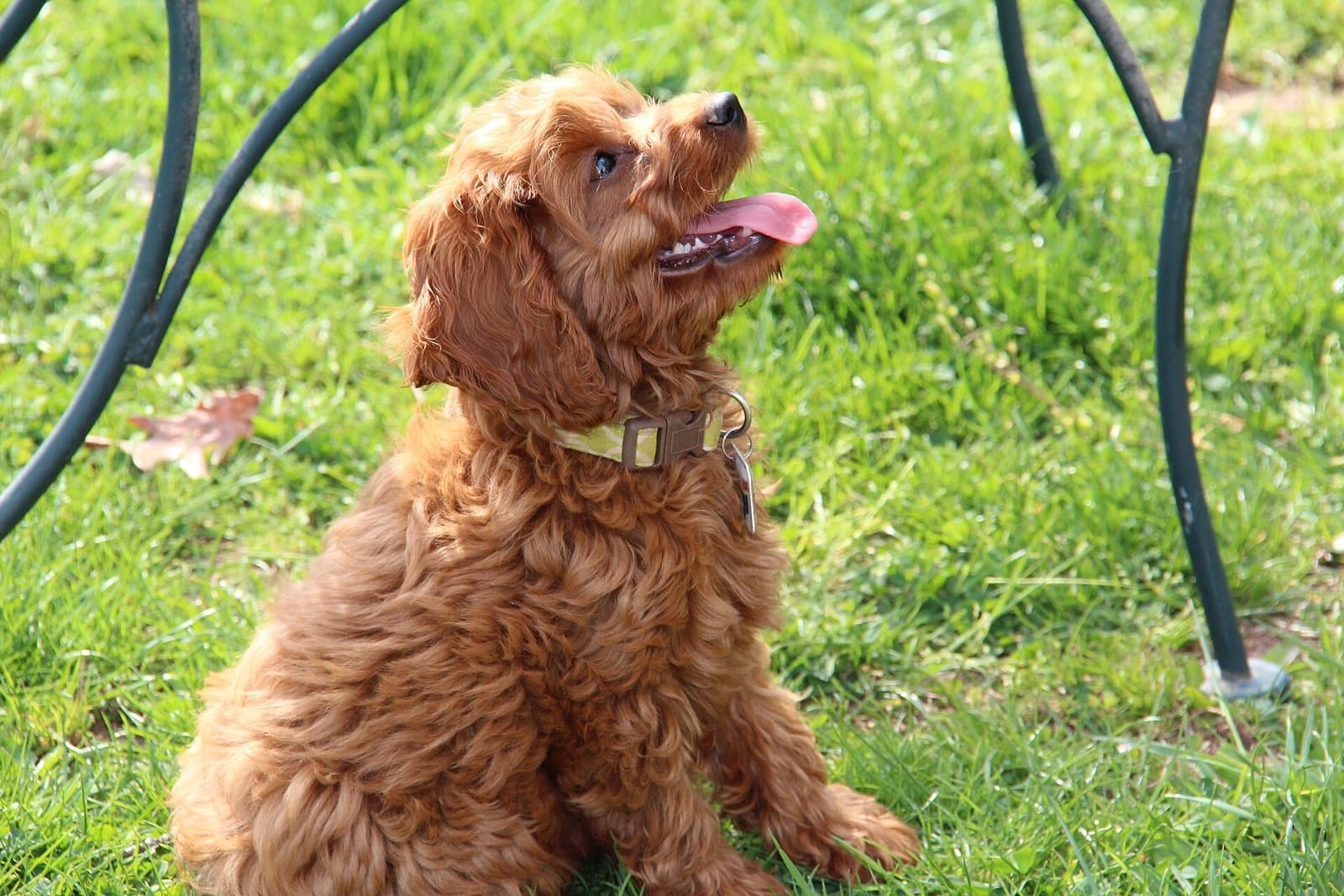
When and how do you start training a puppy?
From the day it arrives, with rewards and in very short bursts. There is no need to wait until the puppy is “old enough”: every time you take it to its toilet spot, call it by name or reward it for letting go of your hand, you are already training it. The RSPCA sums up the method: reward what you want the dog to repeat.
A sensible sequence for the first weeks is this:
- where to go to the toilet;
- hands and feet are not for biting;
- its name, and coming when called;
- settling calmly in its crate or bed;
- staying alone for a while without distress.
All of this runs alongside something that has an expiry date and comes first: puppy socialization. A dog can learn to sit at any age; it cannot learn at any age to stop being afraid of the world.
Why positive reinforcement and not punishment?
Because it works just as well or better, and it does no harm. The veterinary behavior society AVSAB recommends, based on current scientific evidence, that only reward-based methods be used for all dog training, including the treatment of behavior problems.
Its 2021 statement is categorical on three points:
- there is no evidence that aversive methods are necessary or more effective than reward-based methods in any context;
- aversive methods harm the animal’s welfare and its bond with people, and their documented consequences include increased anxiety, fear-related aggression and avoidance;
- training is more effective when it teaches the animal what to do than when it punishes the animal for what it should not do.
AVSAB lists what an appropriate trainer should avoid: tools that cause pain (choke, prong or electric collars), intimidation (shouting, squirt bottles, shaker cans, forcing the dog onto its back) and physical corrections such as leash jerks.
Rewarding does not mean letting the puppy do whatever it wants. The same statement makes clear that all animals learn better with structure, routine and boundaries, and that those boundaries are taught without fear, intimidation or pain.
How do you house-train a puppy?
By taking it to its spot many times a day and rewarding it right there. The veterinary charity PDSA recommends taking the puppy out as soon as it wakes up, after eating, after sleeping and playing, and every two to three hours during the day, and praising it with a high-value treat when it goes.
| When to take the puppy out | Why |
|---|---|
| As soon as it wakes up | It has held on through the whole nap or night |
| 15 to 30 minutes after eating | That is when it usually needs to go, according to the Merck Manual |
| After playing or getting excited | Excitement speeds things up |
| Every two to three hours | Its bladder is small |
| When it sniffs the floor or circles | These are the signs that it is about to go |
The same manual places the point at which a puppy begins to have voluntary control over its bladder and bowels at around eight and a half weeks. In other words, when the puppy comes home it is only just starting to be able to hold on.
Accidents are cleaned up thoroughly and in silence. PDSA puts it bluntly: never punish your puppy for an accident; it is not the puppy’s fault. The Merck Manual agrees: punishment does not help and can be counterproductive.
In an apartment, until the veterinarian clears the puppy to go out on the street, “its spot” can be a puppy pad or a secured balcony. Keep it in the same place every time, and bear in mind that you will later have to teach the switch to going outdoors.
What do I do if my puppy bites hands and feet?
Keep your hands still, offer a toy and, if the puppy keeps going, pause the game for a moment. That is what Battersea recommends: stay calm, avoid sudden movements, redirect the puppy to a chew toy and reward it when it chooses the toy or settles down.
Biting is normal at this age. Battersea explains that puppies use their mouths to explore and to play the way they did with their littermates, and that mouthing increases at around 16 weeks, when the adult teeth come through, and when puppies are tired or overexcited.
- Before it starts: work out when it happens (visitors, rough play, overdue sleep) and keep a toy within reach.
- When the puppy bites: hands still, no shouting and no snatching them away; offer the toy.
- If it carries on: a short break. Move away or take the puppy to its quiet area, and come back once it has calmed down.
- What to avoid: wrestling games with your hands, which teach exactly the opposite.
Very often, a puppy that will not stop biting simply needs to sleep. And if there are children at home, this is the point where the most supervision is needed: children and dogs: living together safely.
How do you teach a puppy its name and to come when called?
First the name, then a short word for recall, and a reward every time the puppy reaches you. Dogs Trust suggests starting in an enclosed space: get the puppy’s attention with its name, say the word, take a step back and reward it with a happy voice and something tasty when it comes.
- The name: say it once; when the puppy looks at you, reward. That way the name means “pay attention, something good is coming”.
- The word: “come” or “here”, always the same one and the same for the whole family, paired with a gesture such as opening your arms.
- Distance and distractions: increase them little by little. In open spaces, use a long line attached to the harness until recall is reliable.
Two mistakes spoil it. One is repeating the word over and over when the puppy does not come: it learns that the word can be ignored. The other is getting angry when it finally arrives, or calling it for something it dislikes: it learns that coming costs it something.
How do you get a puppy used to the crate?
Gradually, and with the door open at first. PDSA suggests leaving treats inside so the puppy goes in by itself, giving it long-lasting chews there, closing the door for a few seconds and stretching that time out over days, first with you in the room and then stepping out briefly.
If the puppy becomes distressed at any step, go back to the previous one. The whole process usually takes at least a few weeks.
Three limits set by PDSA:
- the crate is never used as punishment;
- a dog should not be shut in for more than three hours at a stretch, and less at the beginning;
- it is not a way to manage a separation anxiety problem without professional guidance.
Taught well, the crate is worth the effort. AVSAB notes that puppies who are used to a crate are less stressed if they ever have to be hospitalized or travel by car or plane. For the next step, learning to stay alone, see separation anxiety in dogs.
How long should a training session last?
Not long. The RSPCA recommends short, regular sessions rather than long ones, in a place free of distractions, without rushing each dog’s pace and always ending on something the dog gets right. It does not give a figure in minutes, and we did not find a veterinary source that sets one.
As practical guidance for a puppy a few weeks old: a few minutes, several times a day, spread between meals, play and naps. The clearest signal is the puppy itself: if it gets distracted, scratches, yawns or wanders off, the session has already gone on too long.
It helps to use part of the daily food ration as rewards, to practice one thing per session and to have the whole family use the same words. Some puppies ask for more: a Border Collie or an Australian Cattle Dog (Blue Heeler) needs mental work every day.
If you see intense fear, growling when someone touches its food, or aggression, this is no longer a matter of basic training. AVSAB recommends that a veterinarian assess those cases, rule out medical causes and decide whether a behavior specialist is needed.
Frequently asked questions
At what age do you start training a puppy?
From the day it comes home. There is no age to wait for: routines, its name and where to go to the toilet are taught from day one, in very short sessions.
Does it help to scold a puppy or rub its nose in it when it pees indoors?
No. PDSA asks owners never to punish an accident, and the Merck Manual notes that punishment does not help and can be counterproductive. Clean up thoroughly and take the puppy out more often.
How long does it take to house-train a puppy?
It varies a lot. According to PDSA, some puppies learn in a few days and others take considerably longer, and accidents are normal along the way.
When does a puppy stop biting?
According to Battersea, most grow out of it at around five or six months; in large breeds it can last longer. It usually increases at around 16 weeks, when the adult teeth come through.
How long can a puppy stay in a crate?
Not long. PDSA sets a limit of three hours at a stretch for a dog that is already used to it, and less at the beginning. Nights, with toilet breaks, are a separate case.
Are choke collars or electric collars recommended?
No. AVSAB asks owners to avoid tools that cause pain, such as choke, prong or electric collars, and states that there is no evidence that aversive methods are more effective than reward-based ones.
Sources
- AVSAB (American Veterinary Society of Animal Behavior): Position Statement on Humane Dog Training. 2021. Position on reward-based and aversive methods
- AVSAB: Position Statement on Puppy Socialization. 2008. The crate as a place for rest and play
- PDSA: toilet training your puppy. House-training routine and accidents
- Merck Veterinary Manual (dog owners’ version): behavior problems in dogs. Age of voluntary control and trips outside after meals
- Battersea Dogs & Cats Home: how to stop my puppy mouthing. Why puppies mouth and how to redirect it
- Dogs Trust: recall training. How to teach recall
- PDSA: crate training. Steps, sizes and maximum time
- RSPCA: dog training. Short, regular sessions; it does not give a length in minutes
Topics puppy · training · positive reinforcement · crate · mouthing
Keep reading