Health tests and pedigree
Hip and elbow dysplasia in dogs: what it is, how it is evaluated and what each result means
By Casa Trufa · · 7 min read
For information only: it does not replace a visit to your veterinarian.
Hip dysplasia and elbow dysplasia are developmental defects of those joints that end in arthritis. They have a hereditary basis and are evaluated with X-rays: the FCI grades hips from A to E and elbows from 0 to 3. Parents with good results reduce a puppy’s risk, but they do not eliminate it.
What is hip dysplasia in dogs?
It is a developmental defect of the hip joint: the head of the femur does not fit firmly into its socket and stays loose. That abnormal play wears down the cartilage and, over the years, produces arthritis and pain. The American College of Veterinary Surgeons describes it as more common in large breeds.
A puppy is not born with a damaged hip: the joint forms badly as it grows. That is why it cannot be ruled out at a glance in a two-month-old puppy. The signs described by that same source are lameness, reluctance to get up or jump, shifting weight toward the front legs and loss of muscle in the hind legs. Many affected dogs show nothing at first.
What is elbow dysplasia?
It is a common name for several developmental problems of the elbow that end in arthritis. The OFA, the orthopedic registry in the United States, groups three: fragmented coronoid process, osteochondritis dissecans and ununited anconeal process. They can appear alone or together, in one elbow or both.
What is seen on the X-ray, and what is graded, is the arthritis those problems produce. In the dog it shows as lameness in the front legs; confirming it is the veterinarian’s job.
How is dysplasia diagnosed?
With X-rays of the hips and elbows, taken in a standard position and graded by an independent body, not by the dog’s owner. Each body has its own scale, so a certificate only makes sense if you know where it comes from. These are the ones you will find in a parent dog’s documents:
| Body | How it grades the hip | Favorable result |
|---|---|---|
| FCI (the one the ACCC applies) | Five grades, from A to E | A (no dysplasia) and B (transitional) |
| OFA, United States | Seven categories: excellent, good, fair, borderline, mild, moderate and severe | Excellent, good and fair are considered normal |
| BVA, United Kingdom | Points: from 0 to 53 per hip, up to 106 in total | The lower, the better; it is compared with the breed median |
| PennHIP | Measures hip laxity and estimates the risk of future arthritis | The less laxity, the lower the risk |
For the elbow, the ACCC regulations use four grades: 0 (no signs of arthritis), 1 (mild arthritis), 2 (moderate) and 3 (severe). The OFA does not number the normal elbow and grades the abnormal one as I, II and III.
In Colombia the official procedure has its steps: Article 21 of the regulations requires asking the ACCC for a referral before the X-rays are taken, having them taken by a veterinarian authorized by the association, and having the report issued by its scientific commission. It also accepts the OFA certificate and, for imported dogs, the one from the body recognized in the country of origin.
At what age can the official X-ray be taken?
Once the skeleton has finished forming, and each body sets its own limit. The ACCC sets 18 months as the minimum age for a valid diagnosis. The OFA certifies from 24 months, and between 4 and 23 months it gives only preliminary evaluations. The BVA asks for at least one year.
The PennHIP method is different: it looks not for arthritis but for laxity, and according to its laboratory it is reliable from 16 weeks. It is useful for estimating risk earlier, but it does not replace the report the ACCC requires to authorize a mating.
A practical consequence follows. In breeds subject to dysplasia screening, the ACCC does not allow the first mating before 18 months (Article 19). A parent dog of one of those breeds that has already had registered litters should have its X-rays done.
What result should a parent dog have?
On the FCI scale, hips A or B and elbows 0 or 1. The ACCC regulations ask that only dogs with reports in the first two grades, for both hips and elbows, be mated, and leave any other mating to prior evaluation by its technical committee. They require the same grades to award the Colombian championship.
According to the table in Article 21, a C hip or a grade 2 elbow is subject to review and can lead to a conditional or limited registration; grades D and E, and a grade 3 elbow, lead to a limited registration, which prevents the dog from producing registered litters.
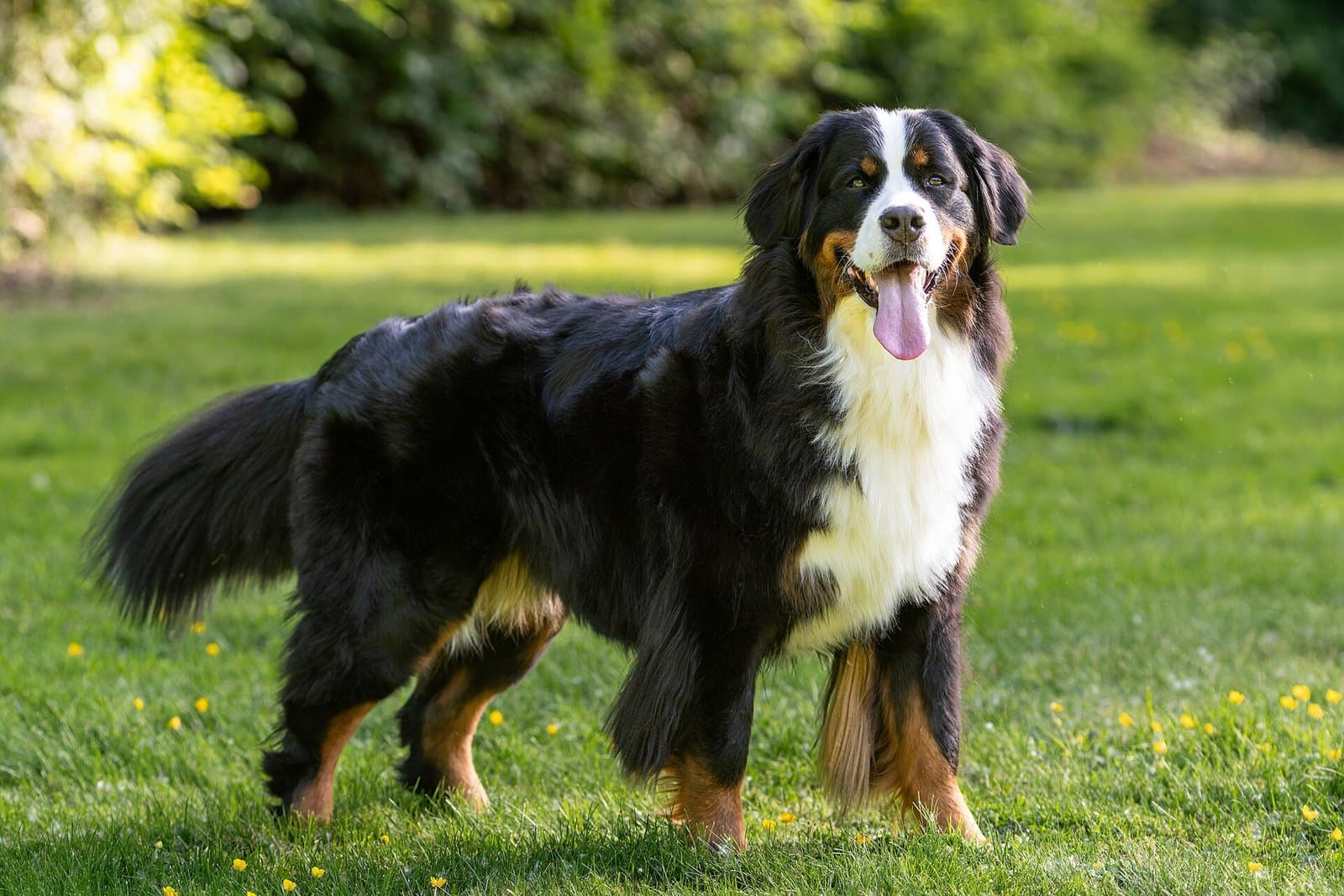
The breeds covered are listed by group in that same article. Of the breeds on this website, the list includes the Border Collie and the Australian Cattle Dog, both in group 1, and the Bernese Mountain Dog, in group 2. Small companion breeds are not on the list: from group 9, the ACCC includes only the Standard Poodle.
If the parents are clear, will the puppy be free of dysplasia?
There is no guarantee. Heredity is, according to the American College of Veterinary Surgeons, the most important risk factor, but not the only one: the environment also plays a part, and there is no DNA test that rules it out. Parents with good hips lower the probability; they do not bring it to zero.
That explains two things that sometimes come as a surprise. First, that a puppy from grade A parents can develop dysplasia. Second, that dysplasia is not looked for with a swab like other hereditary diseases: the ACCC regulations themselves place it among those diagnosed by radiology (Article 18). What is evaluated is the outcome, the joint of the fully grown dog.
The OFA adds a useful nuance: X-rays and symptoms do not always go hand in hand. There are dogs with severe arthritis that run and play as if nothing were wrong, and others with minimal changes that are very lame.
What can you do to protect your puppy’s joints?
Control what does depend on you: weight and the speed at which the puppy grows. Veterinary sources agree that overfeeding accelerates the development of the disease and that rapid weight gain complicates it. The OFA notes that calorie intake and level of exercise influence its severity.
- Keep the puppy lean. A large-breed puppy should not grow as fast as possible. The veterinarian adjusts the portion; we cover it in feeding a puppy by age and size.
- Exercise that fits the puppy. How much and what kind while it grows is a question for your veterinarian, who knows your dog.
- A checkup for lameness. Lameness that lasts more than a few days in a young dog warrants a visit, not waiting.
Frequently asked questions
What does hip dysplasia grade A or B mean?
On the FCI scale applied by the ACCC, A means no dysplasia and B is a transitional state. They are the two grades within which the regulations ask for parent dogs to be mated.
At what age is a dog X-rayed for dysplasia?
It depends on the body. The ACCC sets 18 months as the minimum age for a valid diagnosis; the OFA certifies from 24 months; the BVA, from one year. PennHIP can measure laxity from 16 weeks.
If the parents do not have dysplasia, will the puppy be free of it too?
There is no guarantee. Heredity is the most important risk factor, but many genes are involved, and so is the environment: overfeeding and rapid weight gain. Evaluated parents lower the probability; they do not bring it to zero.
Which breeds need hip and elbow X-rays in Colombia?
Article 21 of the ACCC regulations lists them by group. It includes almost all the breeds in group 1, such as the Border Collie and the Australian Cattle Dog, and almost all those in group 2, such as the Bernese Mountain Dog.
How do I know if my dog has dysplasia?
The usual signs are lameness, reluctance to get up or jump, and loss of muscle in the hind legs, but many dogs show nothing at first. The diagnosis is made by the veterinarian with an examination and X-rays.
Sources
- Asociación Club Canino Colombiano: Reglamento de crianza 2024 (breeding regulations). In Spanish. Articles 19, 20 and 21: breeds that require X-rays, minimum age of 18 months, hip grades A–E and elbow grades 0–3
- American College of Veterinary Surgeons: Canine hip dysplasia. Definition, risk factors and signs
- Orthopedic Foundation for Animals (OFA): Hip dysplasia. Seven categories and preliminary evaluations between 4 and 23 months
- Orthopedic Foundation for Animals (OFA): Elbow dysplasia. Components of elbow dysplasia, grades I to III and minimum age of two years
- British Veterinary Association: Hip dysplasia scheme. Score from 0 to 53 per hip, minimum age of one year
- Antech Diagnostics: PennHIP. Joint laxity method, applicable from 16 weeks
Topics dysplasia · hip · elbow · X-rays · parent dogs
Keep reading
- Genetic tests in dogs: what CEA, TNS, MDR1 and PRA are and how to read the resultHealth tests and pedigree
- Dog coat care by coat type: brushing, bathing and trimmingCare and daily life
- Eye exams and the BAER hearing test in dogs: what they detect and at what age they are doneHealth tests and pedigree
- All articles
Related guides and breeds
- Questions to ask a dog breeder before you choose a puppyGuide
- How much does it cost to own a Bernese Mountain Dog in Colombia each month?Guide
- How to tell if a dog breeder in Colombia is reputableGuide
- Border Collie: the breed profile
- Australian Cattle Dog (Blue Heeler): the breed profile
- Bernese Mountain Dog: the breed profile
- All guides