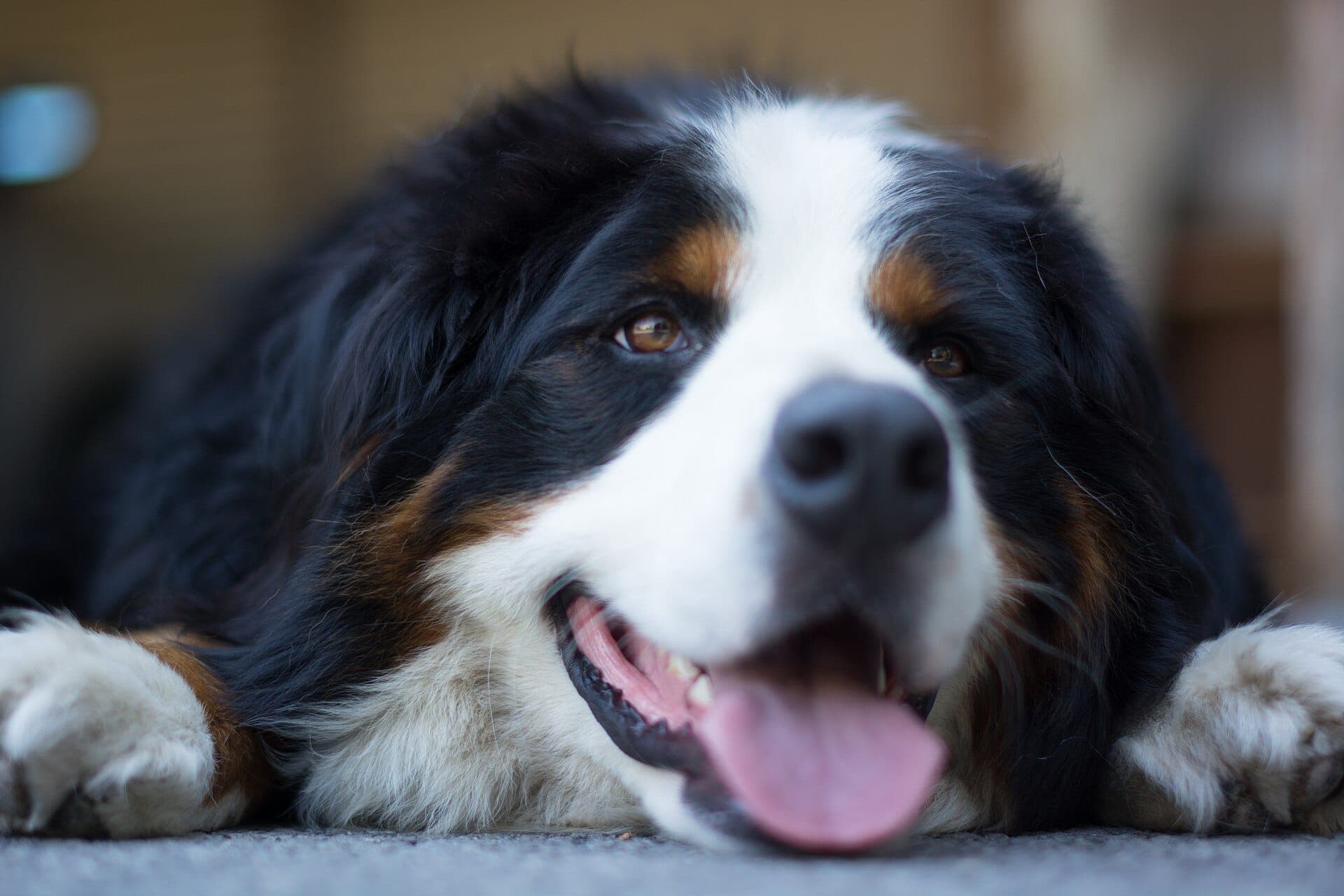
Bernese Mountain Dog
Big, calm and a dog for the whole family.
Also: Bernés de la Montaña · Boyero de Berna
The Bernese Mountain Dog — Bernés de la Montaña or Boyero de Berna in Colombia — is a large dog of 36–50 kg (79–110 lb), calm, patient and devoted to its family. It suits houses with space in a cool or fresh climate. It is not for small apartments or for the hot lowlands: in hot cities we don’t recommend it.
The Bernese Mountain Dog is a large, patient, family-minded dog. Protective without being nervous, it enjoys the house and the yard and gets along very well with children.
- Adult size
- 58–70 cm (23–28 in) · 36–50 kg (79–110 lb)
- Energy
- Moderate
- Temperament
- calm · patient · protective
- Care
- Medium to high
- Health
- Tests on the parent dogs: hip dysplasia, elbow dysplasia, DM, histiocytosis, eye exam.
Before you go on
Does it fit your life?
It is for you if…
- You have a house with space or a yard.
- You want a calm family dog.
- There are children at home.
It is not for you if…
- You live in a small apartment or in the hot lowlands.
- You want a small or very active dog.
- You cannot take on the cost of a large dog.
Our parent dogs’ health tests
Every parent has health tests you can see and verify.
The pages of this breed’s parent dogs, with their tests and documents, are published in Meet the parents.
Climate and life in Colombia
Does your city suit a Bernese Mountain Dog?
We only recommend it in the cool climate zone and the freshest part of the temperate one, from about 1,800 m (5,910 ft) upward: Bogotá and the Sabana, Tunja, Pasto, Manizales, eastern Antioquia (the Oriente antioqueño). In Medellín, Pereira or Armenia it can live with heat management. On the Caribbean coast, in the Llanos, Cúcuta or Neiva we don’t recommend it.
| City | Altitude and climate zone | Bernese |
|---|---|---|
| BogotáBogotá D.C. | ≈ 2,550 m (8,370 ft)Cool | Suits it wellCool weather, which is its own. It needs space and floors that are not slippery. |
| RionegroAntioquia | ≈ 2,080 m (6,820 ft)Cool | Suits it wellCool weather, which is its own. It needs space and floors that are not slippery. |
| MedellínAntioquia | ≈ 1,470 m (4,820 ft)Temperate | With reservationsOnly with heat management: cool floors, shade, walks at dawn and after dark. Let’s talk it through first. |
| CaliValle del Cauca | ≈ 950 m (3,120 ft)Hot | We don’t recommend itA double-coated mountain dog of 36–50 kg (79–110 lb): it suffers in the hot lowlands. We would rather say so than hand one over. |
| BarranquillaAtlántico | ≈ 110 m (360 ft)Hot | We don’t recommend itA double-coated mountain dog of 36–50 kg (79–110 lb): it suffers in the hot lowlands. We would rather say so than hand one over. |
Casa Trufa’s general view based on each city’s altitude; it does not replace your veterinarian’s assessment.
Frequently asked questions
What we are asked most about the Bernese.
Is the Bernés de la Montaña (Boyero de Berna) the same as the Bernese Mountain Dog?
Yes. “Bernés de la Montaña” is how the breed is known and searched for in Colombia; “Boyero de Berna” is the traditional Spanish name, and the FCI’s Spanish nomenclature lists it as “Boyero de Montaña Bernés”. In English it is the Bernese Mountain Dog. They are all the same tricolor Swiss dog.
How much does a Bernese Mountain Dog cost in Colombia?
In October 2026 the third-party websites we checked publish very wide ranges, from about COP 4,300,000 to COP 12,000,000 depending on the breeder. On top of the puppy’s price comes the monthly cost of keeping a dog of 36–50 kg (79–110 lb). Casa Trufa tells you the figure for each litter on WhatsApp.
Can a Bernese live in a hot climate?
It is not advisable in the hot lowlands, that is, below about 1,000 m (3,280 ft). It is a mountain dog with a double coat. It lives well in Bogotá, the Sabana, Boyacá, eastern Antioquia, Manizales and Pasto. If yours is a hot city, we will tell you so before talking about a handover.
How long do they live, and what health problems do they have?
Its life expectancy is shorter than that of most breeds, which is common in dogs of its size. The conditions to watch for are hip and elbow dysplasia, histiocytosis and degenerative myelopathy. That is why we publish the parents’ official X-rays and tests.
Can it live in an apartment?
It is not the right setting for one. It is a large dog that needs space and cool, non-slip floors. It does well in a house with a patio or yard in a cool climate; in a small apartment, and even more so in a hot climate, we don’t recommend it.
“A dog is not just a pet; it is a companion for life. That is why every decision matters.”
Casa Trufa