
Health
Caring for a senior dog: at what age a dog is senior and what changes
By Casa Trufa · · 8 min read
For information only: it does not replace a visit to your veterinarian.
There is no fixed age. The AAHA calls a dog senior when it is in the last 25% of its life expectancy: a large dog can be senior from 7 or 8 years old, and a small one at around 12. From then on, a checkup once or twice a year is advisable, plus watching pain, teeth, weight and behavior.
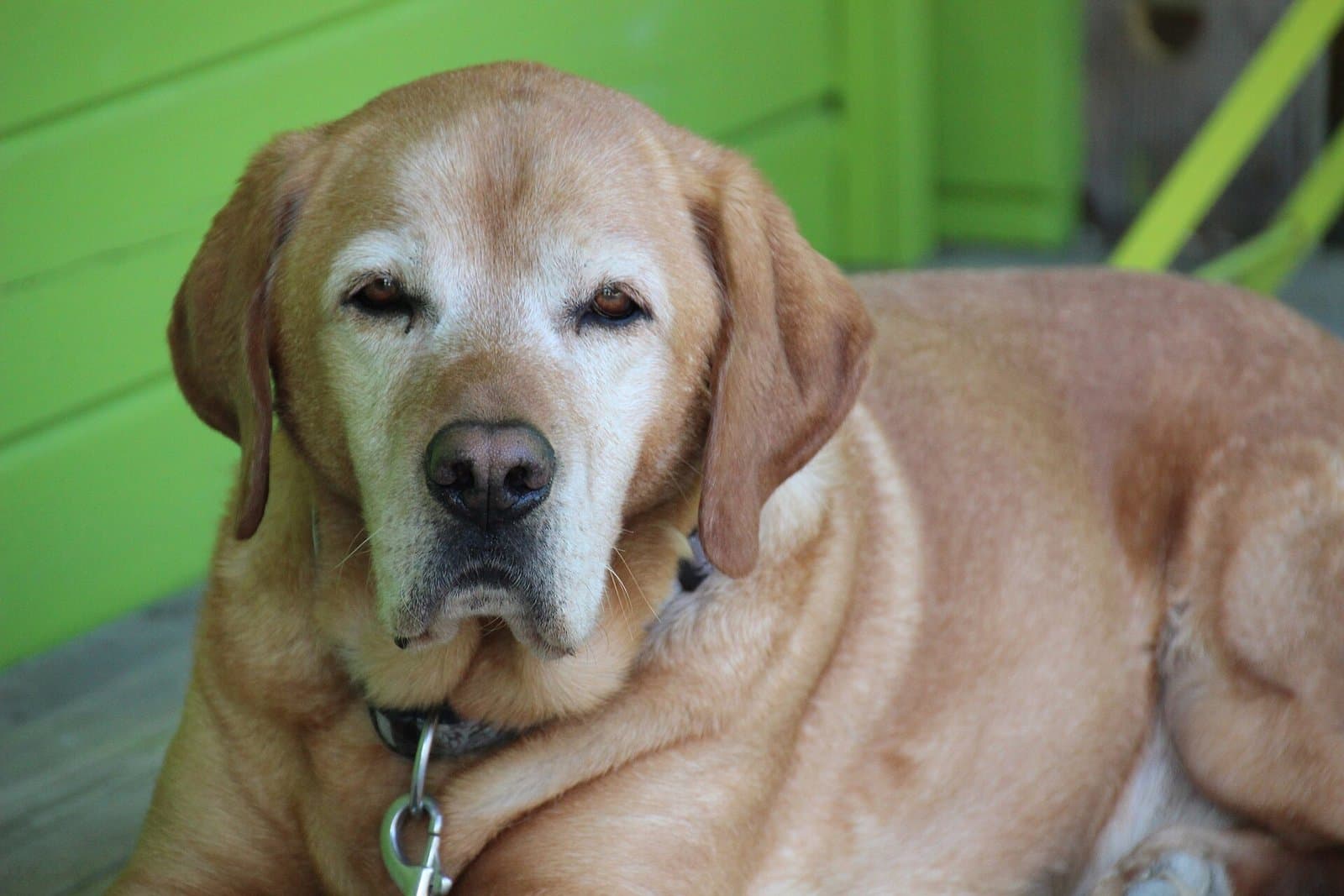
At what age is a dog considered senior?
There is no single age. The American Animal Hospital Association (AAHA) calls a dog senior when it enters the last 25% of its life expectancy. Because small breeds live longer than large ones, the line moves: a large dog can be senior from 7 or 8 years old, and a small one at around 12.
That is how the AAHA guide for families explains it. It adds that dogs with chronic illnesses may age sooner than others of the same age and size.
Applied to the breeds on this site: a Bernese Mountain Dog reaches that stage years before a Maltese or a Maltipoo, and medium-sized dogs, such as the Border Collie or the Australian Cattle Dog, fall in between. Your veterinarian will tell you when to start treating your dog as a senior.
One idea runs through all the guidelines: old age is not a disease. Many changes blamed on “age” have a name, a diagnosis and a treatment, which is why they are worth looking for.
How often should a senior dog see the veterinarian?
More often than before. The AAHA Senior Care Guidelines recommend a medical checkup once or twice a year, which may include a complete blood count, blood chemistry and urinalysis. The aim is to find problems while they are not yet causing symptoms.
At that visit the veterinarian asks about things only you see: how much the dog eats and drinks, how it moves, whether it plays, how it relieves itself, how it sleeps, whether it sees and hears well. Bring the changes written down, even if they seem small.
The veterinarian also feels the joints, spine and abdomen, checks the mouth, eyes and toes, and measures any lump on the skin. The AAHA warns that, to the naked eye, a tumor can look identical to a benign fatty lump, so “wait and see” is not a good policy with new masses.
How do I know if my senior dog has joint pain?
By what the dog stops doing. The AAHA warns that families often mistake for normal aging what is actually chronic pain, because the changes are subtle: the dog does not cry, it simply moves less. Recognizing it early improves the outcome of treatment.
Changes worth telling the veterinarian about:
| What you see | What it may mean | What to do |
|---|---|---|
| Slow to get up, or sits to one side | Pain in the hip, knee or spine | Film it and make an appointment |
| Hesitates at the stairs, the sofa or the car | Joint pain or loss of strength | Do not force the dog; make an appointment |
| Walks less or lags behind | Pain, or a heart or breathing problem | See the veterinarian soon |
| Always licks the same joint | Localized pain | Checkup |
| Slips on smooth floors | Weakness, pain or long nails | Rugs and a checkup |
| Growls when touched or picked up | Pain | Checkup; do not scold |
Video is a tool the guidelines themselves recommend: in the consulting room a dog walks differently, and seeing it move at home helps detect the problem and measure whether the treatment is working.
Pain management, the AAHA says, should combine several things: prescribed medications, weight control, physical rehabilitation and changes at home. In large breeds there is often a previous history of hip or elbow dysplasia.
Why do a senior dog’s teeth matter so much?
Because periodontal disease is among the most common diseases in dogs, and it hurts even if the dog does not show it. The canine health center at Cornell University states that between 80% and 90% of dogs over three years old have some degree of it, and that it is worse in small breeds.
At ten or twelve years old, a small dog whose mouth has never been checked has usually been in pain for a long time. Cornell lists the signs: bad breath, drooling, rubbing the muzzle, eating more slowly, dropping food, bleeding, refusing chew toys, irritability. By the time they are visible, the disease is already advanced.
The problem is not the tartar you can see but the bacterial plaque under the gum. That is why prevention has three parts, according to Cornell: brushing at home, with a dog trained little by little; a yearly professional checkup; and cleaning under general anesthesia when the veterinarian calls for it.
In a senior dog, anesthesia raises reasonable doubts. They are resolved with the pre-anesthetic tests the veterinarian asks for, not by avoiding the cleaning.
What is cognitive dysfunction in dogs?
It is an age-related deterioration of the brain, similar to Alzheimer’s disease in people. According to the AAHA, it affects between 14% and 22.5% of dogs over eight years old, and it often goes unnoticed at first because it advances slowly.
The signs fall into six categories, which form the acronym DISHAA:
- Disorientation: stares at the wall, gets “lost” at home, waits on the wrong side of the door.
- Interactions: greets less, seeks company less or fails to recognize familiar people.
- Sleep: sleeps by day and wanders or is restless at night.
- House soiling and habits: urinates indoors or forgets commands it used to know.
- Activity: walks aimlessly or loses interest in play.
- Anxiety: becomes distressed more easily, especially when left alone.
It is a diagnosis of exclusion: pain, loss of sight or hearing, and other diseases produce similar changes and have to be checked first. Cornell states that there is no cure, but there is management: treating what comes with it, keeping the dog active with play and walks, and the diet or medications the veterinarian decides on. The earlier it is detected, the better the response.
What should a senior dog’s weight and diet be like?
The most important thing is to keep the dog at a healthy weight. The WSAVA body condition score runs from 1 to 9 and places the ideal at 4 or 5: ribs that can be felt without excess fat, a waist visible from above and a tucked-up abdomen seen from the side.
With the years come two opposite risks. One is gaining weight, because the dog moves less and eats the same, and every extra kilogram bears down on joints that already hurt. The other is losing weight or muscle, which is never normal and always warrants a visit.
The food for the senior stage, the amounts and any supplement are decided at the checkup. Do not change the diet on your own in response to a change in weight: first you need to know why it is happening. And the list of foods dogs should never eat still applies at any age.
How do you adapt your home for a senior dog?
With small changes that give the dog back its independence. The AAHA guidelines suggest ramps, rugs or mats to prevent slipping, raised bowls, padded harnesses to help the dog get up, and suitable beds. They also ask you to check the home for hazards to a dog that sees or hears less.
- Floors: non-slip rugs on tile and wood, especially along the dog’s usual routes.
- Heights: a ramp or a step for the sofa, the bed and the car.
- Bed: firm, roomy and away from drafts, in a place where the dog can still see the family.
- Food and water: bowls at a comfortable height and always in the same place.
- Stairs and pools: with a barrier if the dog has lost sight or balance.
- Routine: shorter, more frequent walks; steady schedules.
And time. A senior dog needs less exercise and the same company as always. If you want to do the math on what this stage adds up to, see how much it costs to keep a dog in Colombia.
Frequently asked questions
At how many years is a dog old?
It depends on size. According to the AAHA, a large dog can be considered senior from 7 or 8 years old, while a small-breed dog may not be senior until around 12.
How often should I take my senior dog to the veterinarian?
The AAHA guidelines recommend a medical checkup once or twice a year, with a complete blood count, blood chemistry and urinalysis. Your veterinarian adjusts the frequency according to how the dog is doing.
How do I know if my senior dog is in pain?
Dogs rarely complain. Look for changes: struggling to get up, avoiding stairs or the car, walking less, licking a joint or being more irritable. Filming the dog walking helps the veterinarian assess it.
Do dogs get dementia?
Yes. It is called cognitive dysfunction and, according to the AAHA, it affects between 14% and 22.5% of dogs over eight years old. It shows as disorientation, changes in sleep and loss of learned habits.
Can I give my dog a human pain reliever for arthritis?
No. The FDA warns that human anti-inflammatories such as ibuprofen or naproxen can be harmful to a pet. Pain treatment is prescribed by the veterinarian.
Sources
- AAHA: Senior status, understanding your senior pet’s life stage. Last 25% of expected life; approximate ages by size
- AAHA: Senior Care Guidelines 2023, defining the senior patient. Definition of the senior life stage
- AAHA: Senior Care Guidelines 2023, evaluating the healthy senior pet. Checkup once or twice a year and recommended tests
- AAHA: Senior Care Guidelines 2023, pain management. Chronic pain, multimodal treatment and changes at home
- AAHA: Senior Care Guidelines 2023, managing cognitive dysfunction and behavioral anxiety. Prevalence and signs (DISHAA)
- Cornell University, Riney Canine Health Center: cognitive dysfunction syndrome. No cure, but management
- Cornell University, Riney Canine Health Center: periodontal disease. Frequency, signs of pain and prevention
- WSAVA: Body condition score chart for dogs. Scale from 1 to 9; ideal is 4 or 5
- FDA: Potentially dangerous items for your pet. Human medications
Topics older dog · senior · joint pain · teeth · cognitive dysfunction
Keep reading