
Rules and paperwork in Colombia
Dog microchips and registration in Colombia: when they are mandatory and how it is done
By Casa Trufa · · 6 min read
No. Colombia has no national rule requiring every dog to be microchipped; Bogotá’s city government acknowledges as much. It is mandatory for dogs classed as “special handling”, which must also be registered with the mayor’s office, and for puppies under twelve months leaving the country. For all other dogs it is voluntary and strongly recommended.
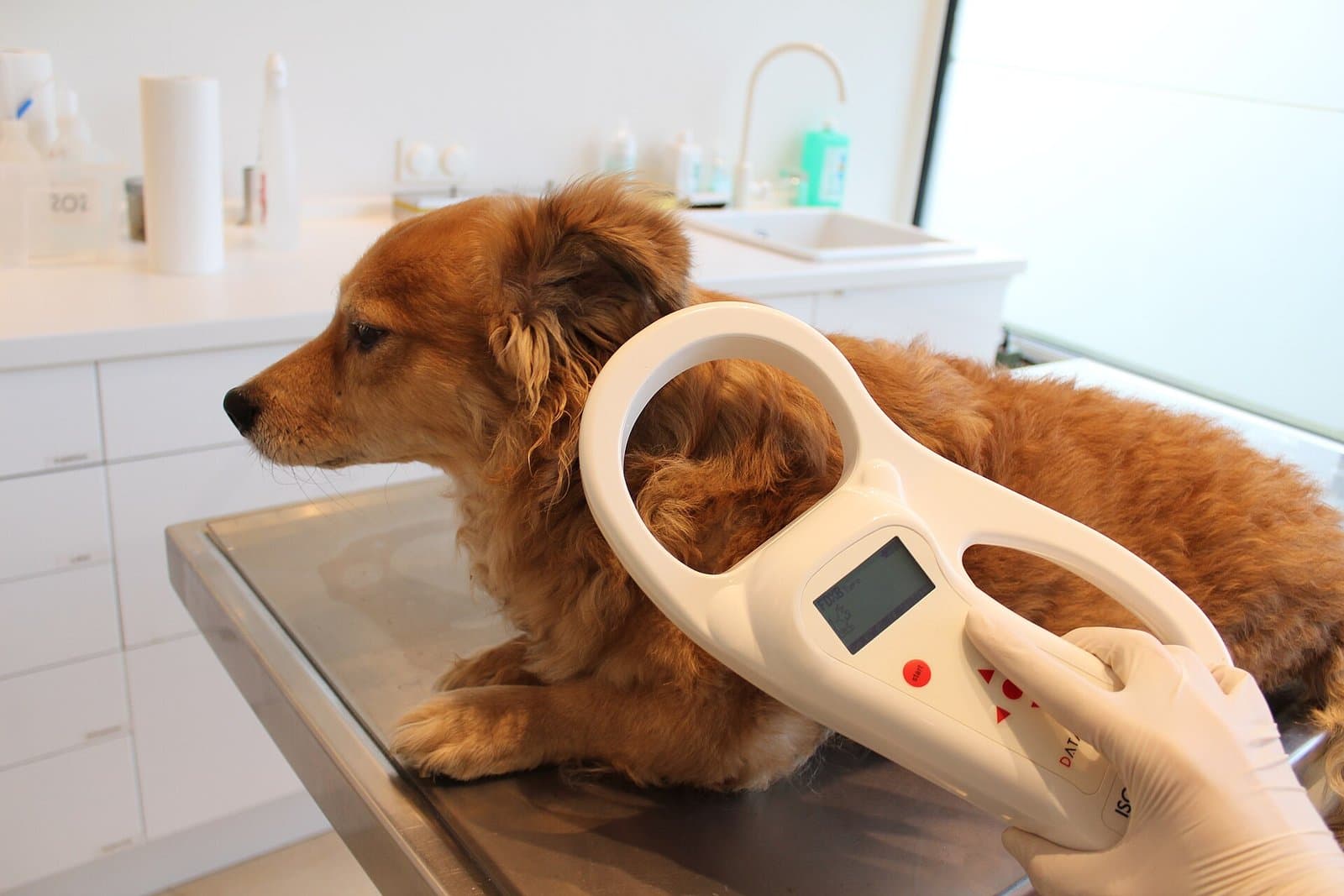
Is a microchip mandatory for dogs in Colombia?
Not as a general rule. Bogotá’s city government itself puts it this way: Colombia currently has no regulation requiring all caregivers to identify their animals. The obligation appears in specific cases: dogs classed as “special handling” (caninos de manejo especial), dogs leaving the country and, under private rules, dogs with a pedigree.
Not being mandatory does not make it any less useful. A collar falls off and a tag wears away; a microchip stays with the dog for life. The condition is that the number is registered with your details and that those details are still true.
When is it mandatory to identify or register a dog?
In three situations: when the dog is classed as “special handling”, when a dog under twelve months is going to leave Colombia, and when the destination country requires it at any age. On top of that there is a private requirement: that of the club that issues the pedigree.
| Situation | What is required | Rule |
|---|---|---|
| “Special handling” dog | Registration in the census kept by the mayor’s office, renewed every year, with an insurance policy and vaccines | Law 1801 of 2016, Article 128 |
| “Special handling” dog | Microchip compliant with ISO 11784-11785, implanted by a licensed veterinarian | Decree 380 of 2022, Article 2.2.8.10.4 |
| Dog under twelve months leaving the country | 15-digit microchip, readable with HDX or FDX-B technology | ICA Resolution 100164 of 2021, item 7.1.3 |
| Travel to the European Union or the United States | Microchip at any age; the United States requires it to be implanted before the rabies vaccine | Rules of the destination country |
| Dog with a pedigree | Microchip or tattoo accepted by the FCI | ACCC breeding regulations |
The “special handling” breeds and their obligations are covered in Colombia’s Police Code and dogs; the requirements for traveling abroad, in taking a dog out of Colombia. Decree 380 adds something useful for everyone: its paragraph 1 orders mayors to allow the registration of dogs that are not “special handling”.
What is a microchip, and which standard should it meet?
It is a very small capsule implanted under the skin that holds a unique number. The international standard is that of ISO 11784 and 11785: a 15-digit code, with FDX-B technology, that any compatible scanner can read. It is not a tracker: it does not emit a location.
According to the guidelines of WSAVA, the World Small Animal Veterinary Association, the first three digits identify the manufacturer or the country and the chip operates at 134.2 kHz. Outside continental Europe it is implanted on the dorsal midline, just in front of the shoulder blades. A veterinarian places it, in a procedure similar to an injection; if your puppy is very small or ill, ask your veterinarian when the right moment is.
How do you register a dog in Bogotá, Medellín and other cities?
It depends on the municipality, because there is no single national registry. Bogotá has the Ciudadano de 4 Patas platform, run by the Instituto Distrital de Protección y Bienestar Animal (the city’s animal protection and welfare institute); Medellín has the MICHIP system, created by Municipal Agreement 038 of 2010. In other cities you have to ask at the mayor’s office.
- Bogotá. According to the city government, public, private and mixed entities implant and register the chip, and the caregiver keeps their details up to date in Ciudadano de 4 Patas. The city government stresses that the chip is only as effective as those details are current.
- Medellín. The Environment Department (Secretaría de Medio Ambiente) asks, at its implantation days, for the guardian’s ID card (cédula) and a Medellín utility bill less than six months old.
- Other municipalities. Ask at the health or environment department whether there is a registry and whether implantation days are held. If there are none, have your veterinarian record the number in the clinical history and in the vaccination record.
What role does ACCC play in identification?
ACCC (Asociación Club Canino Colombiano, Colombia’s FCI member kennel club) does not keep a public pet registry, but rather the studbook of purebred dogs. Its breeding regulations require dogs to be identified with a microchip or tattoo accepted by the FCI (Fédération Cynologique Internationale), and that number is what ties the dog to its pedigree.
The 2024 regulations also oblige every breeder with a kennel name (afijo) to have their own scanner, to prevent one dog being passed off as another. For you the consequence is practical: the number the veterinarian reads on the puppy’s neck must be the same one that appears on its documents. How to read that document is explained in pedigree and ACCC.
How do I update the microchip details?
In the same registry where the chip was recorded, every time you change your phone number, your address or your city, or when the dog goes to another family. The chip number never changes; what goes out of date is the contact information. A chip with an old phone number is worth the same as no chip.
Three habits help: keeping the number on your cell phone and in the vaccination record, asking the veterinarian to read it at every check-up to confirm it still works, and checking once a year that the registry shows your current details. If you receive a puppy that is already identified, ask for the change of holder to be completed, or for instructions to do it yourself.
What do I do if my dog gets lost?
Act the same day. Law 1801 of 2016 requires mayors’ offices to report where found animals are taken and gives thirty calendar days to claim them before they are declared abandoned. With a registered microchip, any veterinarian or animal welfare center that reads it can reach you.
- Notify the registry where the chip is recorded and confirm that your phone number is correct.
- Call the animal welfare center or shelter in your municipality: Article 119 orders that one must exist.
- Check the mayor’s office website. In departmental capitals and municipalities of more than one hundred thousand inhabitants, Article 121 requires a photo of each found animal to be published.
- Notify the veterinary clinics in the area and leave the microchip number.
- Claim the dog within thirty days. After that period, Article 119 allows it to be given up for adoption.
A newly arrived puppy is the one that escapes most easily. Having the chip, the tag and a secure yard or balcony ready is part of preparing your home for a puppy.
Frequently asked questions
Can a microchip locate my dog by GPS?
No. It holds a number that is read by bringing a radio-frequency scanner close to it; it emits no signal and no location. What makes it possible to find the owner is that number being linked to their details in a registry.
From what age can a puppy be microchipped?
The veterinarian decides according to the puppy’s size and condition. As a reference, ICA requires every dog under twelve months leaving the country to already have one, so it is implanted in puppyhood.
Where do I register my dog’s microchip?
It depends on the municipality. In Bogotá, on the Ciudadano de 4 Patas platform of the Instituto Distrital de Protección y Bienestar Animal; in Medellín, in the MICHIP system. In other cities, ask at the mayor’s office or at the health or environment department.
Does a dog with a pedigree already come with a microchip?
The ACCC breeding regulations require dogs to be identified with a system accepted by the FCI, either microchip or tattoo. Always ask for the number and check with a scanner that it matches the one on the document.
Do I have to register my dog with the mayor’s office?
It is mandatory only if it is a “special handling” dog (Article 128 of Law 1801 of 2016). Decree 380 of 2022 orders mayors to allow other dogs to be registered too, which is voluntary.
Sources
- Alcaldía de Bogotá (Bogotá city government): identification, registration and monitoring system for companion animals. States that Colombia currently has no regulation requiring all caregivers to identify their animals. Published February 19, 2025
- Instituto Distrital de Protección y Bienestar Animal: Ciudadano de 4 Patas platform. In Spanish. Bogotá’s registration portal
- Alcaldía de Medellín (Medellín city government): registration and microchip identification of companion animals. In Spanish. MICHIP system, created by Municipal Agreement 038 of 2010
- Decreto 380 de 2022 (Decree 380 of 2022), caninos de manejo especial. In Spanish. Article 2.2.8.10.4: microchip compliant with ISO 11784-11785 for “special handling” dogs; its paragraph 1 allows other dogs to be registered
- Ley 1801 de 2016, Código Nacional de Seguridad y Convivencia Ciudadana (Law 1801 of 2016, National Police Code), articles 116 to 130. In Spanish. Articles 119 and 121 (found animals) and 128 (registration of “special handling” dogs)
- ICA: Resolución 100164 de 2021. In Spanish. Item 7.1.3: 15-digit microchip, HDX or FDX-B, for dogs under twelve months leaving the country
- WSAVA: microchip identification guidelines. ISO 11784 and 11785 standards, implantation site and how the chip is read
- Asociación Club Canino Colombiano: Reglamento de crianza 2024 (breeding regulations). In Spanish. Identification by microchip or tattoo, and the obligation of a breeder with a kennel name to have a scanner
Topics microchip · registration · identification · Ciudadano de 4 Patas · ACCC
Keep reading
- Taking a dog out of Colombia: what ICA, the European Union and the United States requireRules and paperwork in Colombia
- Can a residential complex in Colombia ban dogs? Law 675, the Police Code and the Constitutional CourtRules and paperwork in Colombia
- Colombia’s Police Code and dogs: leash, dog waste, special-handling breeds and finesRules and paperwork in Colombia
- All articles